Understanding Anxiety: Personal Stories & Practical Solutions

Summary
What does anxiety actually feel like — and how do you move through it? Jolian Ardolino, NCPS-accredited counsellor in Barry, shares his own experience with anxiety and practical techniques including CBT, box breathing, and what therapy can offer.
When I was a teenager, I often found myself struggling to cope with daily life. I experienced constant chest pains, tight muscles, stomach issues, and I was frequently sick. After many visits to different doctors, mostly for my physical symptoms, I was finally referred to a clinical psychologist.
When I was diagnosed with anxiety, I didn't really understand what it meant. I remember telling my parents: "So, I'm just scared? That's it?" At that time, I had no real understanding of mental health, and getting this diagnosis felt embarrassing and disempowering. I almost wished for a physical illness — something concrete I could point to. But over time, with support from my family and therapy, I began to understand that anxiety was much more than just feeling "scared." It was both a mental and a physical experience.
Does any of this sound familiar? Although there is more awareness about mental health today, many people still feel lost and overwhelmed when they learn they have anxiety. The good news is that understanding what is happening is the first important step toward gaining control.
From struggle to success
After several months of therapy, I started to make real progress. My anxiety became more manageable, and I began to challenge myself by doing things I had avoided for a long time. I went to college, made new friends, and eventually decided that I wanted to help others going through similar challenges. I completed my undergraduate and graduate degrees in psychology, obtained professional counselling qualifications, and worked my way up to leadership roles in a national charity. Today, I have a fulfilling career, a loving family, and a life that my younger self could never have imagined.
To anyone reading this who is struggling with anxiety: there is hope. If I could find my way through it, so can you. Therapy can support you on that journey.
What exactly is anxiety?
Anxiety is a normal human emotion — everyone feels it sometimes. But when anxiety becomes overwhelming and starts affecting your daily life, it may be an anxiety disorder.
There are different types of anxiety disorders, including generalised anxiety disorder, social anxiety disorder, panic disorder, agoraphobia, PTSD, and OCD. Common symptoms include constant worry, restlessness, muscle tension, fatigue, irritability, trouble concentrating, and sleep problems. These symptoms are not "just in your head" — they are very real and can have a big impact on your quality of life.
Recognising these symptoms is an important first step toward managing anxiety.
Incorporating relaxation techniques
An important part of managing anxiety is learning how to calm your body when your internal alarm system goes off. These are skills that need practising regularly.
Box breathing
A simple but powerful breathing exercise:
- Inhale slowly through your nose for a count of four.
- Hold your breath for a count of four.
- Exhale slowly through your mouth for a count of four.
- Hold again for a count of four.
Repeating this cycle several times can help calm your body's stress response. Practising box breathing regularly — especially when you feel anxious — signals to your brain that the situation isn't as dangerous as it seems.
Progressive muscle relaxation (PMR)
This involves tensing and then slowly releasing different muscle groups in your body:
- Start by tensing the muscles in your feet for a count of five, then release.
- Gradually work your way up your body — calves, thighs, abdomen, chest, arms.
- Focus on the difference between the tension and the relaxation.
Visualisation
Visualisation involves imagining a peaceful, calming scene:
- Sit or lie down in a comfortable position.
- Close your eyes and take slow, deep breaths.
- Picture yourself in a calming setting — a beach, forest, or anywhere you feel safe.
- Spend a few minutes immersed in this scene, allowing yourself to feel the relaxation it brings.
The smoke alarm analogy
Picture a smoke alarm — that little plastic box designed to save your life if there's ever a fire. Now imagine if that alarm started blaring every single time you made toast.
Anxiety works in a similar way. It's our internal alarm system, meant to protect us from danger. But when it becomes too sensitive, it starts reacting to situations that aren't actually dangerous. This can lead to avoiding certain situations, reinforcing the belief that those situations are dangerous, and making the anxiety worse over time.
Changing the conversation with your anxiety
We can't just rip out our internal alarm system — it's an essential part of who we are. But instead of letting it run wild, we can change the way we respond to it and slowly retrain it.
Imagine someone who had a panic attack in a crowded shopping centre. Since that day, even thinking about leaving the house makes their alarm go off. Each time they avoid going out, the anxiety gets a little stronger. The alarm thinks, "I kept us safe again," and next time it starts blaring even earlier.
The way forward lies in gently challenging those anxious thoughts and feelings instead of avoiding them. This process is called exposure therapy — gradually facing anxiety-provoking situations in small, manageable steps to show yourself that they're not actually dangerous.
It takes courage, and it takes patience. But over time, this approach can help recalibrate your internal alarm, making it less sensitive and giving you back your freedom. We can't make the world safer, but we can build you up.
Moving forward
Anxiety can feel overwhelming, but it's important to remember that it's not impossible to overcome. Strategies like CBT, relaxation techniques, and therapy can all help. You don't have to face anxiety alone.
If you're struggling with anxiety and would like support, I offer online therapy across the UK and face-to-face sessions in Barry, South Wales. No pressure, no commitment — just a conversation to start with.
Explore Related Services
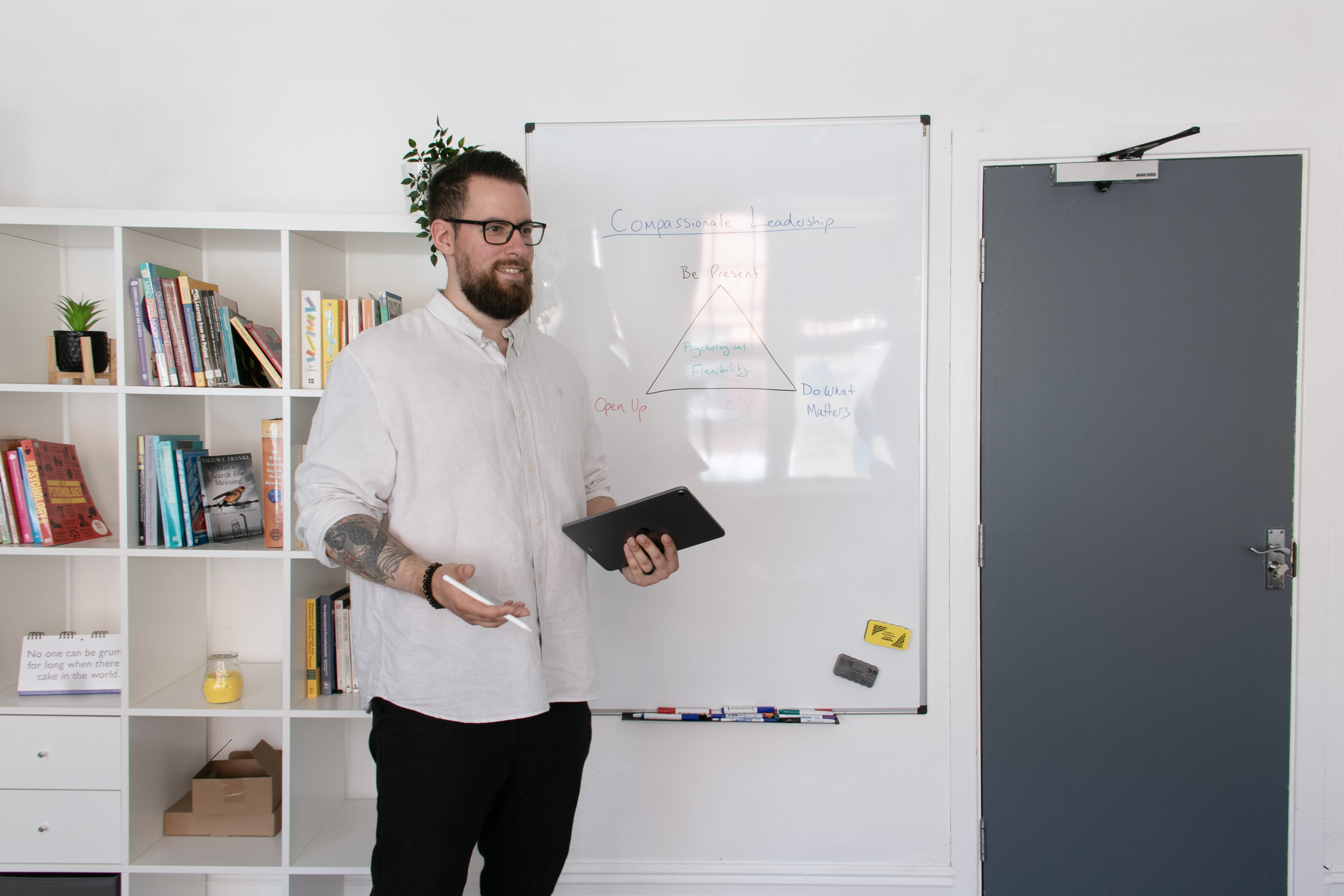
Written by
Jolian Ardolino
NCPS-accredited Counsellor & Psychotherapist (MSc Psychological Sciences, Level 5 Diploma in Counselling). Jolian works with anxious, burnt-out professionals in Barry, South Wales and online across the UK.
More about Jolian →Take off the lanyard. This space is for you.
Book a free 15-minute consultation with Jolian — no pressure, no waiting list, no GP referral. Just an honest conversation about what's going on.
Book a Free Consultation