
There's No Off Switch for Burnout — How to Manage Stress in Caring Professions
Summary
Burnout in caring professions isn't solved by a simple 'off' switch. This post explores why stress builds up for healthcare, social care, and education workers, and how real relief comes from practical strategies — like setting boundaries and learning to 'turn down the brightness' of overwhelm.
If I had a big red "OFF" switch for burnout, my diary would be empty.
People in health, social care, and education often say versions of the same thing to me:
"I just need something to switch off when I get home." "Is there a quick fix to stop feeling like this?"
If you're reading this between patients, lessons, or visits, you probably know the feeling: living in crisis mode, constantly firefighting, telling yourself you'll rest "when things calm down." (They don't.)
Let's be honest about why there isn't a switch — and what you can do instead.
Burnout builds up over time
Burnout rarely arrives as a single dramatic event. Instead, it's the result of a slow drip of "just this once" decisions:
- "I'll stay late and finish these notes."
- "I'll take that extra class/visit/shift — there's no one else."
- "I'll deal with my own stuff in the holidays."
Over time, this becomes your normal. Your nervous system never really settles. The job you trained for — teaching, caring, supporting — starts to feel like permanent crisis management.
Do quick techniques actually help?
Think of your capacity and resilience as a bottle. The water inside is stress.
Everyone's bottle is different — some are big, some small — but they all have tiny holes in the bottom that let stress slowly drain away. This is your built-in recovery system: sleep, small moments of rest, laughing with colleagues, a quiet cup of tea.
But in helping professions:
- You keep pouring more in — extra responsibility, more "can you just…?"
- Stress comes in faster than it can drain out.
- You rarely, if ever, get to tip the bottle and let a proper load pour away.
Eventually, the bottle overflows. That's burnout: tears in the car, snapping at home, waking at 3am replaying the day.
Techniques like deep breathing, grounding exercises, and progressive muscle relaxation are like tilting the bottle — they help some stress spill out. They can calm your system between sessions, help you unwind before you get home, and signal to your body: "You're safe enough to soften, just for a moment."
They're not the whole solution. If we only ever tilt the bottle and never address why we're pouring so much in, nothing really changes. That's where therapy comes in — not just practising techniques, but also setting boundaries and examining beliefs like:
- "I can't say no; people will suffer."
- "Everyone else is coping; it must just be me."
- "Rest is something I earn, not something I deserve."
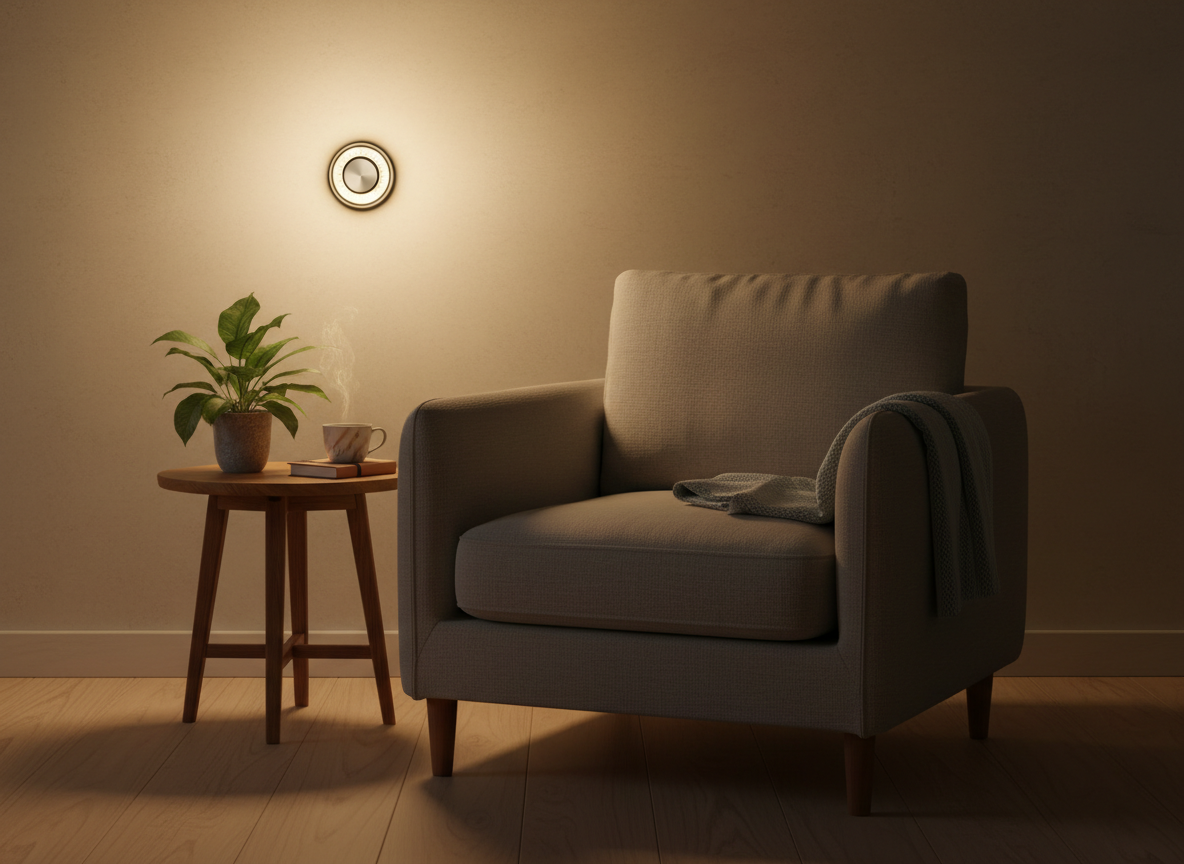
Think dimmer switch, not off switch
The closest thing to a "switch" is really a dimmer — but when you're burnt out, the light isn't just on; it's blinding.
Therapy for burnout isn't about plunging you into darkness. Instead, it's about learning where the dimmer is — and how to use it. That means:
- Turning the intensity down from "permanent crisis" to something manageable
- Noticing your warning signs earlier, before you're overwhelmed
- Building small, realistic boundaries that let you step out of the glare
- Giving your nervous system regular chances to adjust, recover, and reset
Over time, clients say things like:
"I still have bad days, but they don't flatten me." "I can leave work at work more often." "I don't feel like I'm hanging on by my fingernails all the time."
It's not about darkness or denial — it's about clarity, comfort, and control over how much light you're exposed to.
You didn't get here overnight — you don't have to untangle it alone
If you're a nurse, social worker, doctor, teacher, TA, or any helping professional thinking "that's me" — you are not weak, and you're not "bad at coping."
You're a human being in a system that's asked too much, for too long.
There's no magic off switch. What I do offer is:
- A space where you don't have to hold it all together
- Practical tools that fit your actual workday
- Support to slowly change the patterns that keep you permanently "on"
One small, intentional step out of survival mode.
Explore Related Services
Written by
Jolian Ardolino
NCPS-accredited Counsellor & Psychotherapist (MSc Psychological Sciences, Level 5 Diploma in Counselling). Jolian works with anxious, burnt-out professionals in Barry, South Wales and online across the UK.
More about Jolian →Take off the lanyard. This space is for you.
Book a free 15-minute consultation with Jolian — no pressure, no waiting list, no GP referral. Just an honest conversation about what's going on.
Book a Free Consultation